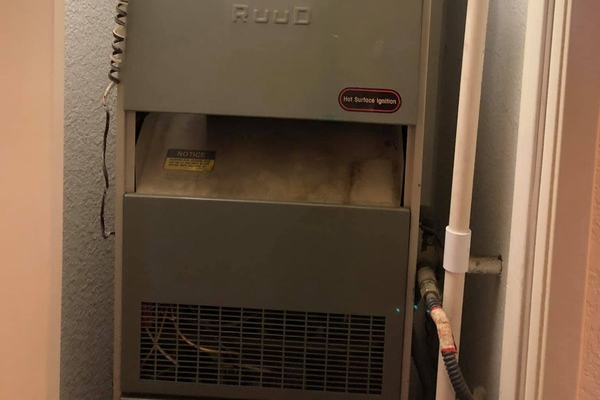
Yes, a furnace tune-up is worth it. A yearly visit catches safety problems early, keeps small parts from wearing out faster than they should, and helps you avoid a no-heat call on the coldest night of the year.
In Hemet, a furnace sits unused from about April until the first cold night in November. After that, it has to start up and run every night for roughly three months. Because of that long gap, a furnace tune-up in Hemet before winter is the only reliable way to know whether your heating system is ready to run safely.
Many people assume a mild climate means the heater needs less attention. In my experience, the long rest is what causes most of the trouble. Dust settles on the burners and the flame sensor all summer, and nobody notices because the furnace isn’t running
A tune-up won’t repair a cracked heat exchanger, and it can’t bring back a furnace that has already failed. What it does is find developing problems while they’re still small and inexpensive to fix. If your furnace is already blowing cold air, shutting off after a few seconds, or not heating at all, you need a repair instead.
Our Furnace Repair in Hemet services explain how we diagnose heating problems and restore heat before replacement even comes up.
Table of Contents
ToggleWhat does a furnace tune-up mean?
A furnace tune-up is a yearly check, cleaning, and test of your heating system while it still works. The purpose is preventive maintenance. Nothing has broken yet, and the visit keeps it that way.
A repair is a different service. It starts with a symptom, such as no heat or a burning smell, and it ends once the technician fixes that one fault.
What is included in a furnace tune-up?
Homeowners ask me this more than anything else, usually as “what comes with a furnace tune-up?” Most people picture a filter change and a technician with a flashlight. A professional visit goes much further, because the goal is to learn how the furnace burns fuel, how it moves air, and whether any part is close to failing.
Every home and furnace is a little different. Even so, a complete gas furnace tune-up usually covers the following steps.
Checking the thermostat
First, we confirm that the thermostat reads the room temperature correctly and tells the furnace to start and stop at the right times. A thermostat that is off by a few degrees can make the furnace run longer than it needs to, which adds wear and raises your gas use.
Inspecting the air filter
Next, we look at the filter, since a clogged one restricts airflow through the whole system. That restriction can lead to longer heating cycles, overheating that trips the limit switch, uneven temperatures between rooms, and extra strain on the blower motor. Many of the heating problems we diagnose start with a neglected filter.
Cleaning the burners and the flame sensor
In Hemet, this step matters a great deal. Dust collects on the burners and the flame sensor during the long off-season, and a coated sensor can’t confirm that a flame is present. As a result, the furnace lights, then shuts off a few seconds later. Cleaning these parts often brings normal operation back without replacing anything.
Testing the igniter or pilot assembly
The igniter has one job, and it repeats that job every cold morning. Hot surface igniters crack with age, and a weak one usually gets worse before it fails completely. Testing it in October is much easier than replacing it at 2 a.m. in January.
Inspecting the heat exchanger
The heat exchanger keeps combustion gases separate from the air you breathe. During a tune-up, we look for cracks, corrosion, and signs of overheating. Of all the steps, this one is the main reason a proper tune-up is worth paying for.
Testing for carbon monoxide and checking the flue
We also test for carbon monoxide and confirm that the flue and venting carry exhaust safely outside. Together, these two checks show whether the furnace is burning cleanly and venting correctly.
Checking gas pressure and connections
Correct gas pressure keeps the burners firing evenly. In addition, we inspect the gas connections for anything that looks worn, loose, or out of place.
Testing the safety switches and limit controls
These controls shut the furnace down when something goes wrong. They only protect your home if they work, and the only way to know is to test them.
Inspecting the blower motor, wiring, and electrical connections
In many Hemet homes, the furnace shares its blower with the air conditioner, so that motor has already worked hard through months of summer heat. For that reason, we check the motor, capacitor, wiring, and connections for wear before the heating season adds more demand.
Measuring temperature rise and airflow
Finally, we measure temperature rise and airflow to see how the whole system works together. These numbers show whether the furnace is running the way the manufacturer designed it to.
Electric furnaces skip the combustion checks. As a result, the visit is shorter and focuses on the heating elements, sequencers, and wiring.
Why do the safety checks matter most?
The safety checks matter most because the risks are very different from a normal maintenance problem. A dirty filter costs you money, but a cracked heat exchanger or a blocked flue can send carbon monoxide into your house. You can’t see or smell that gas, so I treat the safety checks as the real reason for the visit and the rest as a bonus.
Whatever the condition of your furnace, keep a working carbon monoxide alarm near the bedrooms. If you ever smell gas, leave the house right away and call the gas company from outside.
Need a professional furnace tune-up in Hemet?
If it has been more than a year since your last heating maintenance, or you’ve noticed rooms warming slowly, odd noises at start-up, or a rising gas bill, a professional tune-up can find small issues before they turn into costly repairs.
At Rain or Shine Heating, Plumbing & Air Conditioning, we provide thorough furnace tune-ups for homeowners in Hemet, East Hemet, Valle Vista, San Jacinto, Winchester, and the surrounding communities. Our maintenance visits focus on safety and reliable performance, so your furnace stays dependable through the coldest nights of the year.
Call us at (951) 813-0737 to schedule your furnace tune-up, or to request an inspection if something about your heating system worries you.
How do you know if your furnace needs a tune-up?
Furnaces rarely quit without warning, and that is one thing I’ve learned from years of working in Hemet. The trouble is that our winters are short, so people tend to live with a slow-heating room or a strange noise until the night the furnace finally gives out. Watching for the signs below can save you from that night.
Rooms take longer to warm up than last winter
When the furnace still runs but the house doesn’t feel the way it used to, performance has probably started to slip. This is often the first sign, and it is easy to miss because nothing looks broken.
The furnace starts and stops every few minutes
Technicians call this pattern short cycling, and it isn’t normal. It usually points to restricted airflow, a dirty flame sensor, or a safety control reacting to a problem.
Banging, squealing, or rattling at start-up
A short hum when the furnace fires up is normal. Banging, squealing, and rattling are not. These sounds don’t always mean a major repair, but they do tell you that something needs attention before it gets worse.
A yellow or flickering burner flame
A healthy burner flame is steady and blue. If you see a yellow or flickering flame, the burners may be dirty or combustion may be poor, so it needs a professional look.
A gas bill that keeps climbing
If your gas bill has gone up while the weather stayed the same, the system is probably working harder than it should. In that case, I start looking for dirty burners, restricted airflow, or worn parts.
A burning smell that doesn’t fade
A light burning smell the first time you run the heat is common, since dust burns off the heat exchanger. If the smell lasts beyond that first run, have the furnace checked.
A carbon monoxide alarm that sounds
Leave the house first, then call for help.
One or two of these signs on a ten-year-old furnace usually point to maintenance or a small repair. However, several signs at once on an old furnace lead to a different conversation, which we cover later in this guide.
How often should you get a furnace tune-up?
For a gas furnace, I recommend one professional tune-up every year. Combustion equipment needs a safety check every heating season, and how many hours it runs doesn’t change that. Our Hemet furnaces run fewer hours than one in Colorado, but they also sit idle much longer, and the dust in the San Jacinto Valley doesn’t take the summer off.
An electric furnace in a lightly used home can sometimes go two years between visits. Still, some homes should stay on a yearly schedule no matter what, especially when:
- The furnace is 10 years old or older.
- Pets add hair and dust around the return air system.
- The furnace sits in a tight closet, as it often does in manufactured homes.
- Someone in the home has allergies or breathing problems.
The goal is not to check a box once a year. It is to keep the system safe and reliable before cold weather puts every part to work.
What month is best for a furnace tune-up in Hemet?
October is the best month, and late September works too if you like to be early. Hemet’s average overnight lows drop from the upper 40s in October to about 38°F in December and January. The valley sits near 1,600 feet, so clear winter nights feel colder than visitors expect. Afternoons still reach the upper 60s, which means the furnace does nearly all of its work after dark and before sunrise.
That timing matters because the middle of a cold night is the worst moment to discover a problem. Booking in October also shortens your wait. Once the first cold snap arrives, every heating company in the valley fills up with no-heat calls.
If it’s already November or later, book anyway. A late tune-up is far better than none.
How long does a furnace tune-up take?
Plan on 60 to 90 minutes for one furnace. A newer system in a clean, easy-to-reach spot can go faster, while attic units, older equipment, and furnaces that need extra cleaning take longer.
If a technician finishes in 15 minutes, be cautious. That was a quick look, and you probably paid for more than a look.
How much should a furnace tune-up cost?
Homeowners usually start with “how much does a furnace tune-up cost?” A better question is what the price actually covers. Nationally, a standard visit falls between $75 and $200. A full tune-up that includes combustion analysis and airflow testing can run from $150 up to about $400.
Around Hemet, heating companies often advertise seasonal offers a little under $100. Some also sell membership plans that bundle a fall furnace visit with a spring AC visit for roughly $150 a year. Those numbers are what you will mostly see if you search “furnace tune-up cost near me.”
Price alone can mislead you, though. I’ve seen many ads for very cheap tune-ups, and in a lot of cases the visit was a quick walk-through meant to sell extra repairs. A real tune-up is preventive maintenance and should never feel like a high-pressure sales appointment. Before you book, ask whether the visit includes:
- Cleaning the burners and the flame sensor
- A carbon monoxide test
- A heat exchanger inspection
- Checks of gas pressure and safety controls
- Testing of the blower and electrical parts
- A written list of what the technician checked and found
I’ve always believed that homeowners deserve honest answers. If your furnace is in good shape, I’ll tell you so. If something needs repair soon, I’ll explain why, show you the problem whenever I can, and let you decide how to move forward.
Are the $99 furnace specials worth it?
A $99 special can be a good deal, but it depends on the company. Search “furnace tune-up specials near me” and you’ll find plenty, such as a $99 heating tune-up near Hemet, a $99 furnace maintenance special, or a $99 heater service special. Many honest companies run these offers to meet new customers during the slow weeks before winter. Others use them to get a salesperson into your living room.
To tell the difference, ask what the visit covers and read the company’s recent reviews. When you search for furnace tune-up Hemet reviews, look for customers who say the technician explained the findings and didn’t push. Comments like that tell you more than any “best furnace tune-up in Hemet” list.
Can I do any of the tune-up myself?
You can do a few parts yourself, and those parts help between professional visits. Most homeowners can safely handle the following tasks.
- Check the air filter every month during heating season, and change it when it looks gray. This is the most useful task a homeowner can do.
- Keep boxes, storage, and laundry away from the furnace.
- Make sure furniture isn’t blocking the supply and return vents.
- Test your carbon monoxide and smoke alarms.
- Run the heat for about ten minutes on a mild October evening, so you aren’t testing it for the first time on the coldest night.
On the other hand, some jobs need special tools and training, so leave them to a licensed technician. These include adjusting gas pressure, cleaning the burners, testing electrical parts, inspecting the heat exchanger, and anything inside the furnace cabinet. Trying these without training can damage the furnace and create serious safety risks.
People also ask about booking a furnace tune-up and duct cleaning together. These are two separate services, and duct cleaning isn’t part of a standard tune-up. Most homes don’t need it every year. It’s worth pricing if you see heavy dust at the vents, have had rodents or a remodel, or have never had the ducts inspected in an older home.
What fails first on a furnace in Hemet?
Most people expect a big, expensive part, but the answer is usually smaller. In Hemet, the first things to fail are the small parts that deal with flame and dust. The most common ones are:
- The flame sensor gets coated over the summer and shuts the burners off after a few seconds.
- The hot surface igniter weakens with age and eventually cracks.
- A clogged air filter overheats the furnace and trips the limit switch.
- The capacitor and blower motor can start the winter already worn after a summer of moving air for the AC.
Most of these cost little when a technician finds them in October. They cost much more when they fail on a cold night, and the visit becomes an emergency call.
What mistakes shorten the life of a furnace?
After years of working on heating systems in Hemet, I keep seeing the same mistakes. Fortunately, most of them are easy to avoid.
The biggest mistake is waiting until the furnace stops working. Many homeowners assume that if it still runs, everything is fine, but that is rarely true. Parts wear down gradually, and a yearly visit is the chance to catch the wear before it turns into a breakdown.
The second mistake is forgetting the filter. A neglected filter affects every part of the system, from airflow to blower wear, and changing it on time is one of the cheapest ways to protect your furnace.
Ignoring small warning signs comes third. Slow-warming rooms, strange noises, and short cycling all cost more when you put them off.
Skipping annual maintenance is the fourth. Some furnaces run for years without it, and others don’t. Homeowners usually find out which kind they own only when something fails.
Last, never silence a carbon monoxide alarm and hope for the best. If it sounds, get everyone outside and call for help.
What’s the difference between a furnace tune-up and a furnace repair?
People often use the two terms as if they meant the same thing, yet the services are quite different.
| Furnace Tune-Up | Furnace Repair |
|---|---|
| Preventive maintenance | Corrects a specific problem |
| Furnace is generally working | Furnace has a failure or performance issue |
| Focuses on cleaning, inspection, and testing | Focuses on diagnosing and replacing failed parts |
| Improves safety and reliability | Restores heat after something has gone wrong |
| Usually scheduled once a year | Scheduled when the furnace isn’t heating properly |
When does a tune-up become a repair?
A tune-up becomes a repair when the inspection finds a failed or damaged part that keeps the furnace from running safely or efficiently. For example, we may find a failed igniter, a dirty or failing flame sensor, a weak capacitor, an overheating blower motor, a faulty limit switch, or a damaged heat exchanger. Maintenance finds these problems early, but replacing the defective part counts as a repair.
Can a furnace tune-up really prevent expensive repairs?
A tune-up can help you find developing problems before they become major repairs, but it can’t prevent every breakdown. It also won’t fix a furnace that is already failing, and nobody can honestly promise a winter without problems. A tune-up lowers the odds, and it doesn’t remove them.
Even so, it earns its price in several ways. It catches safety problems early, and it finds worn parts while they are still cheap to replace. It also keeps the furnace from running longer than it should on every cycle. In addition, many manufacturers ask for proof of yearly maintenance before they honor a parts warranty, so keep your invoices.
When is a tune-up not enough?
Sometimes the inspection shows a furnace that is near the end of its life. At that point, the repair-or-replace questions begin.
What’s the average lifespan of a house furnace?
Most gas furnaces last about 15 to 20 years. Light winter use helps furnaces in this area. On the other hand, many of them share a blower with the air conditioner, and that blower works hard through five months of summer.
What is the $5,000 rule for a furnace?
To use this rule, multiply the furnace’s age by the repair quote. If the result is under $5,000, repairing usually makes sense. If it’s over $5,000, start comparing replacement prices. For example, a 9-year-old furnace with a $300 repair scores 2,700, so you would fix it. A 17-year-old furnace with a $600 repair scores 10,200, so replacement deserves a closer look.
Treat the rule as a rough guide. Repair and equipment prices have risen, and the formula says nothing about safety. A cracked heat exchanger means replacement at any age.
Should a 25-year-old furnace be replaced? What about a 40-year-old one?
At 25 years, I would start planning for a replacement even if the furnace still heats. Parts become harder to find, efficiency is well below current models, and the risk of a heat exchanger failure goes up each winter.
At 40 years, I would replace it. Many furnaces that old are standing-pilot models, and I wouldn’t want one running overnight while a family sleeps.
How much does it cost to replace a furnace for a 2,000 sq ft house?
There isn’t one honest number, because the price varies too much. A furnace replacement for a home that size generally costs several thousand dollars installed. The final total depends on the efficiency rating, the condition of the ductwork, where the unit sits, and whether you replace the air conditioner at the same time. Ask for a written quote based on a load calculation for your house, because a good installer sizes the furnace to the home, and square footage is only part of that.
What is the most reliable furnace brand?
Homeowners are sometimes disappointed by my answer, since I tell them the installer matters more than the badge. The major brands build furnaces from many of the same components. A mid-priced unit that the installer sizes correctly and sets up carefully, and that you maintain every year, will outlast a premium unit that gets none of that.
What questions do homeowners ask before scheduling a furnace tune-up?
We hear these questions most often from homeowners in Hemet, San Jacinto, and Valle Vista.
My furnace still works. Do I really need a tune-up?
Yes, a yearly tune-up is still a good idea. It keeps the furnace safe and may catch small issues before they get expensive. For a gas furnace, the safety check alone is reason enough.
Will a tune-up lower my gas bill?
It may, if the furnace is running inefficiently because of dirty burners, restricted airflow, or other minor problems. Results depend on the condition of the equipment, so no one can promise a specific saving.
How long does a furnace tune-up take?
Most visits take about 60 to 90 minutes, depending on the age and condition of the furnace.
Will you try to sell me a new furnace?
No. Our goal is to evaluate your system, explain what we find, and recommend only what your equipment needs. Many furnaces simply need maintenance and not replacement.
Who should I call for a furnace tune-up in Hemet, CA?
Most people start by typing “furnace tune-up near me,” and the results look a lot like the ones for “AC repair near me” in July. That’s normal, because in Hemet the same local companies handle both air conditioning and heating. Many of them run plumbing, heating, and air under one roof. Choose a company that is licensed, tells you the price before the visit, and puts its findings in writing.
My advice after more than 30 years working on heating systems in Hemet
If I could give every homeowner one piece of advice, it would be to think about maintenance before the furnace stops working on a 38°F night. Every winter, we get emergency calls from people whose furnaces had been showing warning signs for weeks. They had slow-warming rooms, odd noises, short cycling, or a flickering flame.
Many of those problems could have been found during a routine tune-up, long before they became emergencies. Preventive maintenance isn’t about replacing parts that don’t need replacing. Its purpose is to keep your system dependable and safe when you need it most.
Get your furnace ready before the next cold snap
Your furnace has a harder job in Hemet than most people give it credit for. It sits idle for months, collects a summer’s worth of dust, and then faces sudden cold nights without any time to warm up gradually. For these reasons, annual maintenance does more than prevent breakdowns. It protects your family’s safety and comfort, and it gives you confidence that the system will work when the temperature drops.
If your furnace is running normally, a professional tune-up helps keep it that way. If we find worn parts, airflow problems, or other developing issues, we’ll explain exactly what we found, answer your questions, and recommend only the work your system needs. You won’t get pressure to replace equipment that still has life left.
Call (951) 813-0737 today to schedule your furnace tune-up in Hemet and go into the cold months knowing your furnace is safe.