
If you’re searching skunk smell in the house dangerous, you’re not being dramatic. A skunk-like odor indoors can be harmless (spray drifting in), but it can also be a warning sign you should not ignore, especially a possible gas leak. This guide helps you identify the most likely cause and choose the safest next step.
In most cases, a skunk smell inside your house is not dangerous if it’s clearly coming from outdoors and fades with ventilation. But if the odor is strong, sudden, persistent in one area, or you notice other warning signs (like hissing, bubbling near a line, or physical symptoms), treat it as a potential gas leak and prioritize safety first.
If you suspect a gas-related issue (or you’re unsure), it’s safer to have a licensed technician inspect your heating system. Our HVAC contractor in Hemet, CA, can help you rule out HVAC-related causes quickly.
Table of Contents
- Skunk smell vs gas leak: a 60-second reality check
- Why am I smelling skunk in my house? Common causes
- Skunk smell in the house comes and goes
- Skunk smell in the house at night: dangerous?
- One room in the house smells like a skunk
- If the skunk smell starts when the HVAC turns on
- Is it bad to breathe the skunk smell in a house?
- What to do if your house smells like a skunk
- What can be mistaken for skunk smell in a house?
- FAQs
- Final thought
Emergency Safety Callout: If You Think It Could Be Gas
Leave first. Call second. If there’s any chance the odor is gas (even if you’re not sure), follow this exact order:
- Leave immediately on foot (get everyone out, including pets).
- Call your gas utility or 911 from a safe location outside.
- Do not flip switches, use garage doors, ring doorbells, light matches, or search for the leak yourself.
- Stay out until professionals say it’s safe to return.
Natural gas is odorless, so utilities add odorants that many people describe as sulfur, rotten eggs, or skunk-like. If you’re unsure, treat it as an emergency.
Skunk Smell vs Gas Leak:
Use this quick comparison to decide what to do next. If you’re torn between the two, choose safety.
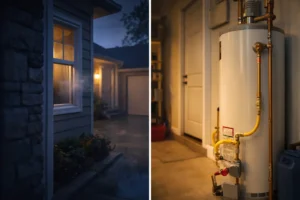
Quick Comparison Table
| What you notice | More likely skunk spray drifting in | More likely gas odorant (treat as an emergency) |
| Where it’s strongest | Near open windows/doors; outdoors first | One spot: near an appliance, meter area, garage, utility room |
| How it behaves | Comes and goes with the wind or ventilation | Persistent and doesn’t fade |
| Other warning signs | No hissing/roaring, no bubbling water | Hissing/roaring, bubbling in standing water, dead vegetation near lines |
| Best next step | Ventilate and trace airflow paths | Leave immediately and call your gas utility/911 |
If the smell seems strongest near an appliance, the meter, or the garage, book a gas appliance inspection to confirm everything is safe and rule out a leak.
If the odor shows up when your system runs or spreads through vents, schedule an HVAC airflow and duct evaluation to identify return-side leaks, duct gaps, or attic/garage air intrusion.
When in doubt: evacuate first, then call.
Why Am I Smelling Skunk in My House? Common Causes
People search for this because the smell is real, but the source isn’t always obvious. These are the most common causes that confuse homeowners.
1) A skunk sprayed outside, and the odor got pulled indoors
Skunk spray is extremely potent and spreads fast because it contains sulfur-like compounds that cling and travel.
Why it can feel inside even when it started outdoors:
- Your HVAC return can pull outdoor air in through small gaps
- The smell clings to entry points (porch, garage seams, attic vents)
- Wind direction pushes odor toward openings and vent pathways
2) Sewer-gas odors mistaken for skunk
A dry drain trap, venting issue, or intermittent plumbing odor can be misidentified as skunk, especially when it’s:
- Strongest near a bathroom, laundry room, or kitchen sink
- Worse at night or early morning
- Present mostly in one room
If the odor clusters around drains or fixtures, that points more toward plumbing than skunks.
3) Electrical overheating that smells skunky or like burnt rubber
If you’re searching a house that smells like skunk and burnt rubber, take it seriously. Overheating wiring, a failing motor, or a hot component can create harsh chemical odors that people describe as skunk/plastic/rubber.
Do this:
- If safe, turn off the HVAC at the thermostat
- If you see smoke, sparking, or heat, treat it as an emergency and call for help
4) A dead animal odor that reads skunky
A dead rodent in a wall, attic, crawlspace, or duct chase can smell sharp and sour, and some people interpret it as skunk-like.
Clues:
- Odor is strongest in one area and gets worse over the days
- Ventilation barely helps
Skunk Smell in House Comes and Goes
If the smell appears and disappears, it usually means airflow is changing, not that the source vanished.
Common reasons:
- Wind direction shifts and pushes outdoor odor toward your home
- HVAC cycling pulls odor in during certain run times
- Cooler nighttime air can trap odor near the ground and around vents
A practical clue: If the smell appears right when your system turns on, that strongly suggests the odor is being transported through a return/duct/attic pathway.
Skunk Smell in House at Night: Dangerous?
Nighttime skunk odor is often explained by animal activity plus cooler air and calmer winds. The real safety question isn’t the time, it’s the pattern:
- If it’s outdoor-driven and fades, it’s usually an annoyance
- If it’s strong, persistent, localized, or paired with warning signs, treat it as a gas concern
One Room in the House Smells Like Skunk
Use this room-based checklist to narrow it down fast.
If it’s a bathroom or laundry room
- Suspect drain-related odors (dry trap, venting, buildup)
- Run water in unused drains (sink/shower/floor drain) and see if it improves
If it’s the garage or utility room
- Treat as higher risk: gas appliances, storage chemicals, or mechanical/electrical sources
- If the smell is persistent in this area, prioritize a safety check
If it’s near vents or the smell spreads when the HVAC runs
- Airflow is transporting the odor (duct pathways, return gaps, attic/crawlspace infiltration)
Local note for Hemet homeowners: In the Hemet area, it’s common for outside odors to become inside odors when HVAC returns pull air from leaky duct connections, garage pressure changes, or attic/crawlspace pathways, especially during certain wind patterns and evening temperature drops. If the smell consistently moves through vents, it usually has a fixable mechanical cause.
If the Skunk Smell Starts When the HVAC Turns On
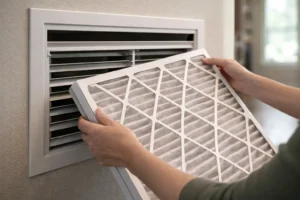
This is one of the most useful patterns you can notice because it helps pinpoint where the odor is entering and spreading.
HVAC-On Smell Checklist (Quick Troubleshooting)
If the smell begins right when the system starts (or gets noticeably stronger), check:
1) Air filter condition
- Replace the filter if it’s dirty or overdue
- A clogged filter can change airflow and pull in odors from unintended gaps
2) Return vent and return pathway leaks
- Check if the smell is strongest near the return grille
- Look for gaps around return boxes, filter slots, or attic access points nearby
3) Attic/crawlspace infiltration
- Odors can be pulled in from attic/crawlspace air if ducting or returns aren’t sealed well
- If you have a crawlspace, check for signs of animal activity near duct runs
4) One supply vent is stronger than the others
- If one room/vent smells worse, the duct line may be pulling odor from a specific zone (attic, wall cavity, or contamination source)
5) Garage air is being drawn into the system
- If the air handler or ductwork is near the garage, pressure differences can introduce garage odors into returns/duct gaps
If you want to prevent odor pull-in and improve overall airflow, an AC tune-up can help catch common issues like restricted airflow, return-side leaks, loose duct connections, and filter/slot sealing problems before they become recurring indoor air complaints.
Local experience (Hemet): We frequently find the HVAC-on-skunk-smell scenario is tied to return-side leakage or attic/garage air intrusion, issues that are often repairable with duct sealing, return corrections, and airflow improvements.
Is It Bad to Breathe Skunk Smell in a House?
Skunk spray is usually an irritant, not a poison, but it can still make you feel awful, especially indoors. Breathing skunk odor can irritate the throat and lungs, trigger nausea, and worsen asthma symptoms in sensitive individuals. If anyone has severe symptoms, breathing difficulty, or you suspect gas exposure, prioritize safety and medical help.
What to Do If Your House Smells Like Skunk
Here’s a safe plan that fits most real-life situations.
Step 1: Run the safety check
If there is any chance it’s gas, leave first and call from a safe location. Do not create sparks.
Step 2: Ventilate if it’s clearly a skunk odor
Open windows and circulate fresh air. Ventilation reduces indoor concentration.
Step 3: Stop odor from spreading through HVAC (temporarily)
- Replace the air filter if due
- Avoid running the system if the odor is being pulled through the returns until you locate the entry point
Step 4: Deodorize affected surfaces and fabrics
For skin/fur exposure, a common neutralizing approach uses hydrogen peroxide, baking soda, and dish detergent (used carefully and not near eyes/mouth). Indoors, focus on washing fabrics, wiping hard surfaces, and continuing ventilation.
Step 5: Identify the source zone (the most efficient way to solve it)
- Outside perimeter near windows/doors
- Attic/crawlspace access points
- Vents/returns and duct pathways
- Drains and utility room
Once you identify the zone, you can choose the right fix (HVAC vs plumbing vs remediation).
What Can Be Mistaken for Skunk Smell in a House?
This is why people say skunk smell but no skunk. The most common mix-ups include:
- Natural gas odorant (mercaptan-style smells)
- Sewer-gas odors near drains
- Electrical overheating that smells rubbery or chemical
- Outdoor odors are pulled in through HVAC returns
If the smell is strong and you cannot confidently place it, treat it as a safety issue first.
FAQs
Is it bad to breathe the skunk smell in a house?
Skunk odor is usually an irritant, not a toxin, but it can still cause nausea, headaches, and throat or lung irritation. People with asthma may be more sensitive. If symptoms are severe or breathing becomes difficult, move to fresh air and seek medical help.
How to tell the difference between a skunk and a gas leak?
Skunk odor often drifts in from outside, peaks near doors or windows, and comes and goes with the wind. Gas odor is more persistent and may be strongest near appliances or utility areas. If you notice hissing or other warning signs, evacuate and call immediately.
Why am I smelling skunk in my house?
Common causes include skunk spray outside being pulled in through HVAC returns, drain-related odors mistaken for skunk, dead animal odor from the attic or walls, or electrical overheating smells. The best clue is where it’s strongest and whether it appears when the HVAC runs.
Can you get sick from the smell of skunk?
Some people feel sick from skunk odor because it can trigger nausea, headaches, and irritation, especially indoors. Breathing it can irritate the lungs and rarely worsen asthma symptoms. If symptoms persist or anyone has breathing trouble, move to fresh air and get help.
What can be mistaken for skunk smell in a house?
Natural gas odorant can smell skunk-like or sulfur-like, and sewer-gas odors near drains can also confuse people. Electrical overheating may smell like burnt rubber or chemicals. If you cannot identify the source and the odor is strong, follow gas safety steps first.
Are there warning signs before a gas explosion?
Warning signs can include a strong sulfur/skunk-like odor, hissing/roaring sounds, bubbling in standing water, dirt or water blowing into the air, or dead vegetation near a line. If you suspect a leak, leave on foot and call your gas utility or 911 from a safe location.
Does opening windows help with a gas leak?
Do not rely on opening windows. If you suspect a leak, evacuate first and avoid spark risks like switches, garage doors, or doorbells. Once outside and safe, call your gas utility or 911. Ventilation is secondary and should not delay evacuation.
Final Thought
If you are searching skunk smell in the house dangerous, the goal is simple: reduce risk fast. Rule out gas first, then narrow the source by pattern, outside drift, drains, vents, HVAC timing, or one-room hotspots.
If you need a licensed local team to pinpoint the cause and fix what’s driving the odor through your home, contact Rain or Shine Heating, Plumbing & Air Conditioning in Hemet at (951) 813-0737.
Written by the Rain or Shine Comfort Team
Licensed, local professionals serving Hemet, CA, and nearby areas of Riverside County with HVAC, plumbing, water softener installation, and water damage restoration services. We focus on clear diagnostics, honest options, and dependable workmanship so homeowners can make confident decisions.