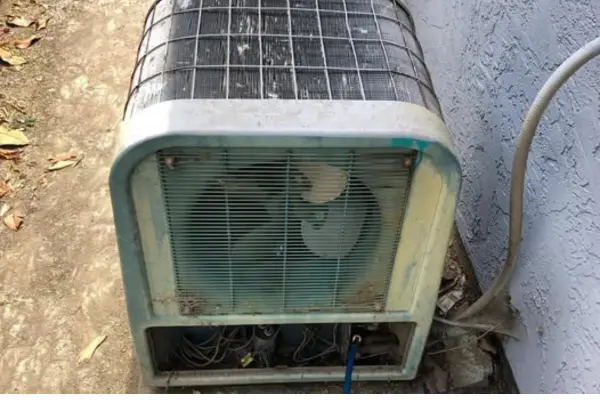
Hemet homeowners know that winter comfort can look different from summer comfort. A sunny afternoon may feel warm, but temperatures can drop into the low 40s overnight during December, January, and February. When your home struggles to stay warm in the early morning, having the right heating system makes a real difference.
Homes throughout Hemet, East Hemet, Valle Vista, San Jacinto, and nearby communities use different types of heating equipment. Some rely on natural-gas furnaces and central ductwork, while others use electric heating, heat pumps, wall heaters, or ductless systems.
But which heating system is right for your home? Should you keep your existing gas furnace, consider a heat pump, or look into another heating option?
In this guide, we’ll explain the common heating systems found in the Hemet area, how they work, what homeowners should consider before choosing one, and how to make a practical decision based on their home’s layout, comfort needs, and budget.
I’m Carlos Corona, owner of Rain or Shine Heating, Plumbing & Air Conditioning. Since 2010, our company has been serving Hemet homeowners with heating and cooling solutions, and I wanted to share what we’ve learned about choosing a heating system that makes sense for your home and our local climate.
What Are the Four Most Common Types of Heating Systems?
Four common residential heating system types are forced-air furnaces, heat pumps, ductless mini-splits, and radiant or hydronic heating systems. Each provides warmth differently, and the right option depends on your home’s existing equipment, available utilities, ductwork, and heating requirements.
Here’s how these systems work and where they may make sense for Hemet homeowners.
1. Gas and Electric Forced-Air Furnaces
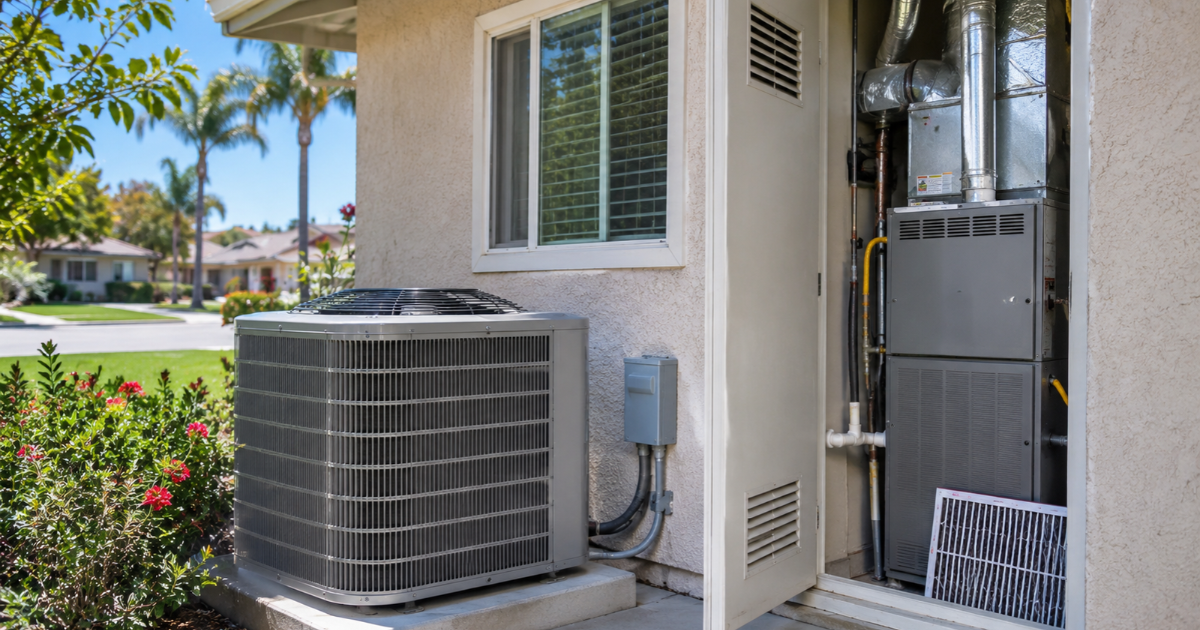
Forced-air furnaces heat air and distribute it throughout your home using a blower, ductwork, and supply vents. They are a familiar heating setup in many California homes, particularly properties with existing central HVAC systems.
Gas furnaces burn natural gas in a combustion chamber to generate heat. The heat exchanger transfers that heat to the circulating air, which the blower sends through your home’s ductwork.
Electric furnaces use electric heating elements to warm the air before distributing it through the same type of duct system.
For homeowners in Hemet, a forced-air furnace can be a practical option when the property already has compatible ductwork and the necessary gas or electrical connections.
However, the condition of the equipment matters. A furnace with restricted airflow, a dirty filter, a malfunctioning blower motor, or ignition problems may struggle to heat the home properly.
If your existing furnace runs but doesn’t provide enough warmth, starts and stops repeatedly, or makes unusual noises, the problem may be repairable. The cause should be diagnosed before deciding whether the equipment needs replacement. Explore our furnace repair services in Hemet to learn about common heating problems and available repair solutions.
2. Heat Pumps
A heat pump provides both heating and cooling by transferring heat rather than generating it through gas combustion.
During winter, the outdoor unit extracts available heat from the outside air and transfers it indoors. During summer, the system reverses its operation to remove heat from your home.
This dual-purpose operation makes heat pumps worth considering in Hemet, where homeowners need air conditioning during hot summers and dependable heating during cooler winter nights.
A heat pump system generally includes an outdoor unit, an indoor air handler or compatible indoor equipment, refrigerant lines, and a thermostat designed for the system.
Some systems also include auxiliary electric heating to help maintain indoor comfort when additional heating is needed.
Before choosing a heat pump, homeowners should consider:
- Whether the existing ductwork is compatible with the new equipment.
- Whether the electrical service can support the system.
- The home’s insulation and heating requirements.
- The equipment’s heating and cooling efficiency ratings.
- The expected installation cost and local electricity rates.
A properly selected heat pump can provide year-round comfort, but the right equipment capacity and installation are important. A system should be evaluated according to the home’s actual heating and cooling requirements rather than selected by square footage alone. Explore our heating installation services in Hemet to understand your equipment and replacement options.
3. Ductless Mini-Split Heat Pumps
Not every Hemet home has conventional central ductwork. Some properties have additions, converted rooms, enclosed patios, or spaces where extending existing ducts may be difficult.
A ductless mini-split heat pump can provide another option.
These systems typically have an outdoor unit connected to one or more indoor units mounted on walls or other suitable locations. Each indoor unit can provide heating and cooling to its designated area, depending on the system configuration. Learn more about our heating maintenance services in Hemet
For example, a homeowner in East Hemet with a room addition may want independent temperature control without extending ductwork throughout the property. A ductless system may be worth evaluating for that situation.
Potential advantages include:
- Heating and cooling without conventional ductwork.
- Independent temperature control in different areas.
- Flexible installation for additions and selected rooms.
- No need to install a full network of supply and return ducts.
However, the number of indoor units, equipment capacity, placement, electrical requirements, and overall installation cost should be considered before choosing a mini-split system.
4. Radiant and Hydronic Heating Systems
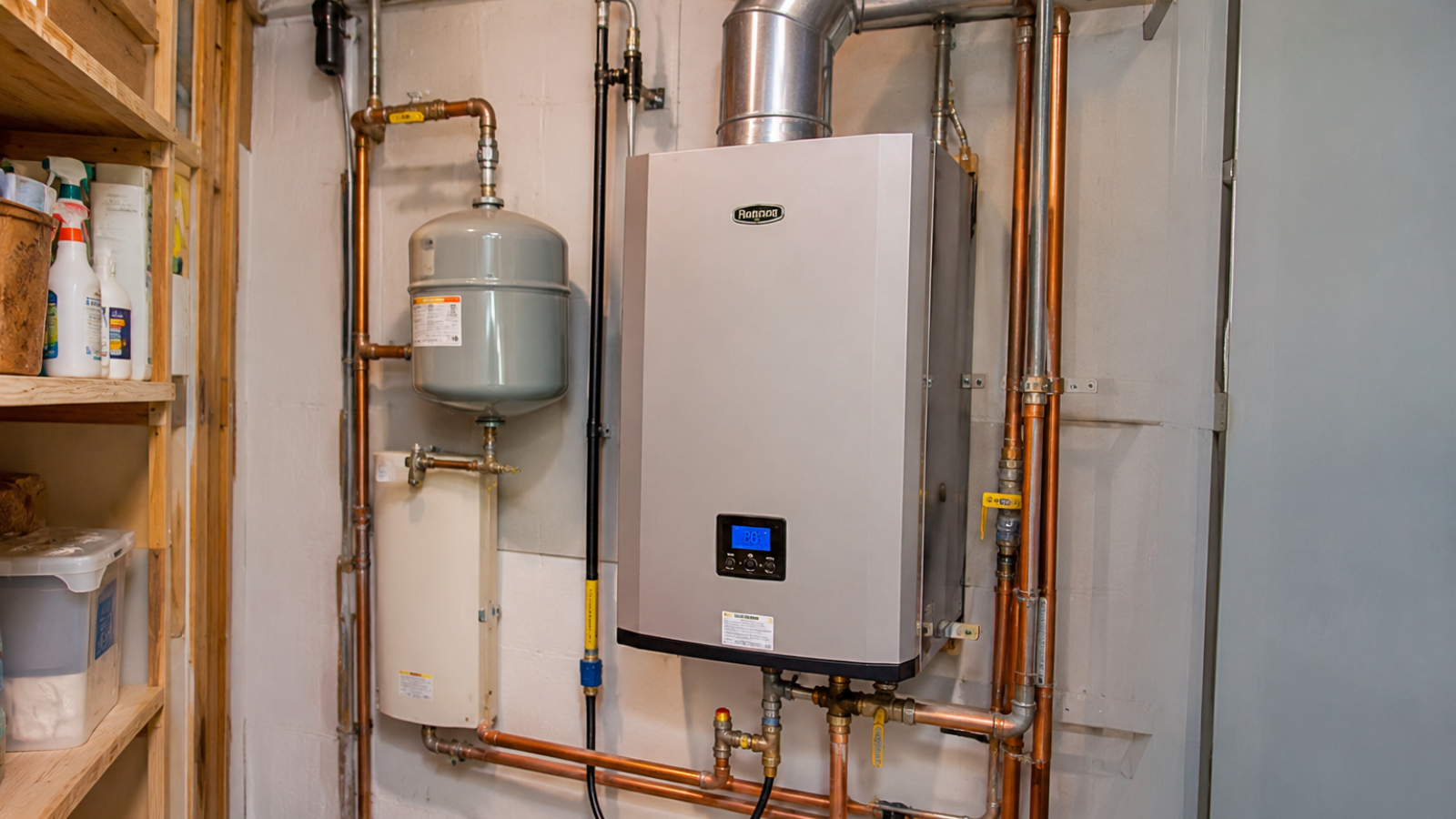
Radiant and hydronic heating systems work differently from forced-air furnaces. Instead of distributing heated air through ducts, hydronic systems circulate heated water through radiators, baseboard units, or underfloor piping.
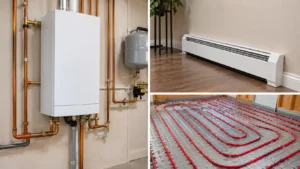
A boiler or another compatible heat source warms the water, which then circulates through the heating network to deliver warmth to different areas of the property.
These systems may be found in homes designed around radiator or underfloor heating rather than conventional central HVAC equipment.
If a property in Hemet already has radiators or hydronic piping, replacing or modifying its heating equipment requires evaluating the entire system. The boiler, piping, circulation components, controls, and heat distribution equipment must work together.
A conventional forced-air furnace is not a direct replacement for a hydronic heating system. The appropriate solution depends on the existing installation and the homeowner’s requirements. Heating is only one part of year-round home comfort. If you’re also looking to improve indoor cooling, explore our air conditioning services in Hemet for information about AC repair, installation, and maintenance.
Other Heating Systems Found in Residential and Commercial Properties
Beyond these four main categories, some properties use wall heaters or packaged heating and cooling units.
Wall heaters: These are localized heating appliances installed in individual rooms or designated areas. They can be useful where a full central duct system isn’t present or required. Their fuel source, venting, and installation requirements depend on the specific model.
Packaged HVAC units: These combine heating and cooling components in one outdoor cabinet, often installed on a rooftop or ground-level platform. Depending on the configuration, they may use gas and electric heating or heat pump technology. They are more commonly associated with commercial buildings and certain specialized residential layouts.
The important point is that a heating system should match the property’s existing configuration and the way the homeowner uses the space.
What Is the Most Popular Heating System in Hemet?
Natural-gas forced-air furnaces are an important residential heating option in California, and gas heating is particularly relevant when discussing homes in Hemet. However, there isn’t a verified local equipment breakdown that establishes the exact percentage of Hemet homes using gas furnaces, electric furnaces, or heat pumps.
California residential heating equipment research provides useful wider context. One statewide study of surveyed single-family homes reported:
- 52% used natural-gas central forced-air furnaces.
- 15% used electric forced-air furnaces.
- 9% used central heat pumps.
These figures describe the surveyed California homes, not Hemet households specifically.
Hemet properties also have different housing layouts, utility connections, and existing HVAC configurations. A home with an established gas furnace and ductwork may have different replacement options from a property using electric heating or a ductless system.
For that reason, the most suitable heating system isn’t necessarily the one used by the greatest number of homeowners. It’s the one that fits your property’s heating requirements, existing equipment, available utilities, and budget.
Real Heating Installation and Repair Experiences From Hemet Homeowners
Choosing a heating system is a significant investment, and homeowners want to know they’re working with a team that takes the time to understand their needs. Rain or Shine’s customer feedback offers a glimpse into the installation and repair work the company has performed for local homeowners.
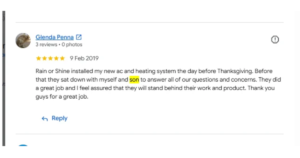
For example, one customer shared that Rain or Shine installed a complete AC and heating system the day before Thanksgiving in 2019. Before starting the project, the team sat down with the homeowner and their son to answer questions and address their concerns.
Another homeowner described a complete heating and air conditioning system installation that also included new ductwork. They appreciated the technicians’ attention to detail and the quality of the work.
Customers have also shared positive experiences with central heating repairs, including service on separate upstairs and downstairs HVAC systems.
These experiences highlight why discussing your home’s existing equipment, installation requirements, and comfort needs before choosing a new heating system matters.
How Does Hemet’s Climate Affect Your Heating System Choice?
Hemet’s climate is one reason homeowners should consider both heating and cooling when selecting HVAC equipment. Summers can be very hot, while winter afternoons are generally mild and nighttime temperatures drop considerably.
Climate normals for the nearby San Jacinto area provide useful context:
| Month | Average daily high | Average daily low |
| November | 74.5°F | 49.2°F |
| December | 64.8°F | 43.2°F |
| January | 67.2°F | 43.4°F |
| February | 67.9°F | 43.2°F |
These are monthly climate averages, not guaranteed temperatures for every neighborhood or individual day.
For homeowners in Hemet, East Hemet, Valle Vista, and San Jacinto, this means heating may be especially important during early mornings and overnight hours, even when the afternoon feels comfortable.
The climate also makes it useful to compare systems that provide both heating and cooling. A heat pump, for example, can serve both purposes, while a traditional gas furnace generally requires a separate air-conditioning system for summer cooling.
However, outdoor temperatures aren’t the only factor that determines comfort. Insulation, window quality, air leaks, duct condition, system sizing, and thermostat settings all influence how well a home maintains its indoor temperature.
A heating system should therefore be selected based on the property’s complete heating and cooling requirements, not simply the fact that Hemet has relatively mild winters.
What’s Better for a Hemet Home: A Heat Pump or a Furnace?
Both heat pumps and furnaces can provide dependable home heating, but they work differently. The better choice for your Hemet home depends on your existing equipment, utility connections, cooling requirements, installation budget, and long-term operating costs.
| Comparison | Gas furnace | Heat pump |
| Heating method | Burns natural gas to produce heat | Transfers heat from outdoor air indoors |
| Cooling capability | Requires a separate AC system | Can provide heating and cooling |
| Energy source | Natural gas | Electricity |
| Ductwork | Usually uses central ductwork | Can use ductwork or ductless indoor units |
| Main consideration | Gas availability and operating costs | Electrical requirements and heating efficiency |
A gas furnace may make sense if your home already has compatible ductwork and natural-gas connections, particularly when the existing system is in good condition.
A heat pump may be worth considering if you’re replacing an older electric heating system or want one system to provide both heating and cooling. Its efficiency, electrical requirements, and expected operating costs should be evaluated before installation.
For homeowners in Hemet, neither option is automatically the best. Compare the equipment, your home’s heating and cooling needs, local utility rates, and the cost of installing the complete system.
If your existing equipment isn’t heating properly, a repair assessment may help determine whether replacement is necessary. Learn more about heating repair services in Hemet, CA.
What’s the Cheapest Way to Heat a Home in Hemet?
The cheapest way to heat a home depends on the existing equipment, fuel prices, insulation, and how much heating your household needs. In many cases, improving the performance of your current system is more affordable than immediately replacing it.
Here are practical ways Hemet homeowners can manage heating costs:
- Maintain Your Existing Equipment: Regular inspections and cleaning can help identify problems that make a heating system work harder than necessary.
- Replace Dirty Air Filters: A clogged filter restricts airflow and can affect the performance of forced-air furnaces and heat pumps.
- Seal Air Leaks: Gaps around doors, windows, and other openings can allow warm indoor air to escape.
- Improve Insulation: Appropriate insulation helps maintain indoor temperatures and reduces unnecessary heating demand.
- Use Thermostat Schedules: Programmable thermostats can adjust temperatures according to your household’s routine.
- Compare Energy Costs: Consider natural-gas and electricity rates when evaluating a new furnace or heat pump.
A portable electric heater may seem inexpensive to purchase, but using multiple units to heat an entire home can become costly. For whole-home comfort, compare the operating costs and suitability of your existing central heating system before relying on supplemental heaters.
What Is the Average Cost of a Home Heating System?
The cost of a new heating system depends on the equipment type, home size, installation requirements, and condition of the existing HVAC setup. A straightforward furnace replacement can have very different costs from installing a new heat pump or adding ductwork to a home that previously had no central heating.
For homeowners in Hemet, the main factors affecting installation costs include:
- Equipment Type: Gas furnaces, electric furnaces, heat pumps, and ductless systems have different equipment and installation requirements.
- System Capacity: The equipment must be appropriately sized for the home’s heating requirements.
- Existing Ductwork: Damaged, undersized, or poorly configured ducts may require modifications.
- Electrical or Gas Connections: New equipment may require changes to electrical circuits, gas connections, or other components.
- Installation Location: Equipment access, mechanical closet dimensions, outdoor unit placement, and venting requirements can affect labor.
- Thermostat and Controls: Some installations require compatible thermostats or additional control components.
Rather than choosing a system based only on its advertised purchase price, ask for an itemized estimate covering equipment, labor, and any additional installation work.
Rain or Shine Heating, Plumbing & Air Conditioning has received customer feedback describing complete heating and AC system installations, including projects involving new ductwork. You can contact the team to discuss your home’s requirements and request an estimate.
What Type of Heating System Is Right for Older Hemet Homes and Mobile Homes?
Hemet has a varied housing stock, and not every property has the same heating equipment or installation layout. The city’s 2025 housing profile reports that approximately 55.6% of housing units are single-family homes, 19.1% are multifamily properties, and 25.1% are mobile homes.
This makes it important to consider the type of property before recommending a heating system.
Older Single-Family Homes in Hemet
Some older homes may have existing gas furnaces, aging ductwork, older thermostats, or heating equipment installed in limited spaces.
Before replacing the system, homeowners should consider:
- Whether the existing ductwork can support the new equipment.
- Whether the return-air openings provide adequate airflow.
- Whether the electrical or gas connections are compatible.
- Whether the existing equipment location can accommodate the replacement.
- Whether insulation and air leakage affect indoor comfort.
A new furnace or heat pump should be selected after evaluating the complete system rather than simply matching the capacity of the old equipment.
Mobile Homes in Hemet
Mobile homes may have different equipment dimensions, duct configurations, and installation requirements from conventional site-built houses.
A replacement system must be compatible with the home’s construction and the equipment manufacturer’s requirements. Homeowners should also consider available installation space, electrical capacity, fuel connections, and the existing air distribution system.
A conventional residential furnace should not automatically be assumed suitable for a mobile home. Equipment must be specifically approved for the intended installation.
Homes With Additions or Rooms Without Ductwork
Some homeowners have converted garages, room additions, or enclosed spaces that aren’t adequately served by the original central heating system.
In these situations, a ductless mini-split may be worth evaluating. It can provide heating and cooling to selected spaces without extending conventional ductwork throughout the property.
The right solution depends on the room’s size, insulation, electrical requirements, and how frequently the space is used.
When Should You Repair, Maintain, or Replace Your Heating System?
A heating system doesn’t necessarily need replacement whenever it stops working properly. Some problems can be resolved with a component repair, while other situations may justify replacing the equipment.
Understanding the difference can help Hemet homeowners avoid unnecessary expenses.
When Heating Repair Makes Sense
Repair may be appropriate when a specific component fails but the rest of the system remains in reasonable condition.
Examples include thermostat problems, ignition failures, blower motor issues, electrical faults, or heat pump operating problems.
A professional diagnosis can identify the cause and help determine whether repairing the existing equipment is a practical option.
If your heater isn’t starting, provides insufficient warmth, or repeatedly shuts off, explore heating repair in Hemet, CA.
When Heating Maintenance Is Needed
Routine maintenance helps identify developing problems before they become unexpected breakdowns.
Depending on the equipment, maintenance may include filter checks, airflow inspection, electrical connection checks, thermostat testing, and examination of relevant heating components.
For Hemet homeowners, scheduling a heating inspection before colder winter nights arrive can help identify issues after months of limited heating use.
When Heating System Replacement Is Worth Considering
Replacement may be worth discussing when:
- The system experiences repeated breakdowns.
- Major components require expensive repairs.
- The equipment struggles to maintain comfortable temperatures.
- Compatible replacement parts are becoming difficult to find.
- The existing system is no longer suitable for the home’s heating requirements.
If your home uses a forced-air furnace, a technician can assess its condition and explain whether repair or replacement makes more sense. For furnace-specific problems, visit furnace repair services in Hemet, CA.
Which Heating System in Hemet Makes the Most Sense for Your Home?
Choosing a heating system can feel a little confusing, especially when there are so many options to consider. What works well in one home may not be the best fit for another. Your home’s layout, existing equipment, insulation, and energy costs all play a part in finding the right solution.
The age of the home, insulation, existing equipment, available utilities, ductwork condition, and long-term operating costs all influence which option makes the most sense. Even two homes in the same neighborhood can have very different heating requirements.
The best decision is one that balances reliable winter comfort, energy use, installation requirements, and your household’s budget. So, which heating system do you think would work best for your home in Hemet?
Choosing the right heating system doesn’t always come down to an easy decision, and that’s perfectly understandable. If you’d like a second opinion, our licensed technicians would be glad to take a look at your home’s heating needs, answer your questions, and help you feel confident about the options. Give us a call at (951) 813-0737 or reach out through our contact page. We’d be happy to hear from you!